
Finding Norwalk Residents
Norwalk sits in a useful place for record research. It is not the Los Angeles County seat, yet the county Registrar-Recorder/County Clerk headquarters is in Norwalk. That makes the city a practical starting point for a deed trail, a voter-record request, a vital-record order, or a public-records question. The right first source depends on the starting clue. An address points to the Assessor Portal and an AIN. A name may lead to a court case, a professional license, a business filing, or a directory volume. A family-history question often needs the library, census schedules, and an obituary or probate file.
Every source describes a different relationship to place. An assessment roll describes a parcel and may include a tax-mailing address. A deed describes a transfer between parties. A voter record describes a registration relationship that is subject to purpose limits. A city directory describes a claimed household or business listing at a point in time. None is a complete household roll, and none should be used to infer a current address from a stale match.
- Write down the known name, address, middle initial, business, parcel clue, case number, or approximate year.
- Use the Los Angeles County Assessor Portal to locate the parcel or AIN when an address is known.
- Move from the parcel to the RR/CC grantor and grantee index when a title or transfer question remains.
- Use the proper court, vital, license, business, or library source for the kind of fact being checked.
- Ask the custodian for a correction or a public-records response when an online result is absent or wrong.
A street question belongs in the address-led workflow, while a one-person question needs identity controls. Old household questions need a date and a place, not only a surname. That split keeps a Norwalk residents directory search useful without overstating what any record can show.
Norwalk's Records Offices
The county's combined Registrar-Recorder/County Clerk is the central records desk for Norwalk. Its headquarters is at 12400 Imperial Highway, Norwalk, California 90650, with public hours Monday through Friday from 8:00 a.m. to 5:00 p.m. The Recorder/County Clerk telephone is (800) 201-8999, and real-estate-record questions use option 3. The office handles recorded instruments, vital copies, public and confidential marriage services, fictitious business names, and election information. The RR/CC contact page is the safest place to confirm the current department route before traveling.
Other records sit with different keepers. The Assessor controls the assessment roll and parcel facts. Los Angeles Superior Court controls case access and courthouse files. The City Clerk handles Norwalk agendas, minutes, contracts, claims, and public-record requests. The Secretary of State and Department of Consumer Affairs hold statewide business and license data. The library holds the historical shelf. Those boundaries matter because a request sent to the wrong custodian can return no record even when another office has one.
Los Angeles County RR/CC
12400 Imperial Highway
Norwalk, CA 90650
(800) 201-8999
Los Angeles County Assessor
Parcel and assessment roll
Address or AIN search
Owner data is offline
Norwalk City Clerk
12700 Norwalk Boulevard
Norwalk, CA 90650
(562) 929-5720
For a county record that has no routine product, the California Public Records Act provides a request path, but dedicated rules still govern deeds, voter data, vital copies, court files, and protected addresses.
Norwalk Assessor Records Portal
An address-led Norwalk residents directory search starts with the Los Angeles County Assessor Portal. The public interface accepts an AIN or street address and offers a map search. If a new development, unit, corner, or unusual abbreviation fails, map browsing and cross streets can help recover the parcel key. The AIN then keeps later work tied to the right land rather than to a similar street name.
| Search by AIN or Address | Text entry; one mode is required. An AIN or street address identifies the parcel. |
|---|---|
| Map Search | Optional spatial browse for parcels, cross streets, and nearby AINs. |
| Public parcel detail | AIN, situs, use, tax area, exemptions, units, beds, baths, square feet, values, base year, map links, and assessment description. |
| Owner-name search | Not offered on the public website. Owner information is available in person or through Property Data Sales. |
- Roll
- An agency's organized record set, such as an assessment or voter roll.
- Index
- A finding aid that points to a record and may not contain its full image.
- Criss-cross directory
- An address-order directory section that moves from a street to a listed name.
- Parcel
- A mapped unit of land identified by an AIN and assessment data.
The parcel result is not a resident result. It can show a situs address, parcel type, structures, values, and a legal-description clue, but the public web display omits the owner-name field. A mailing address is where tax correspondence goes. It may differ from the situs and does not establish who lives at either location.
The Assessor mapping help explains the map interface. A parcel boundary description is not the same as the deed's legal description, and an assessment map is not a boundary survey. Those limits are important when an address changes or a family story follows a tract rather than a modern street label.
The Assessor Portal image below shows the kind of address and map entry that supplies the AIN pivot for a Norwalk residents directory search.
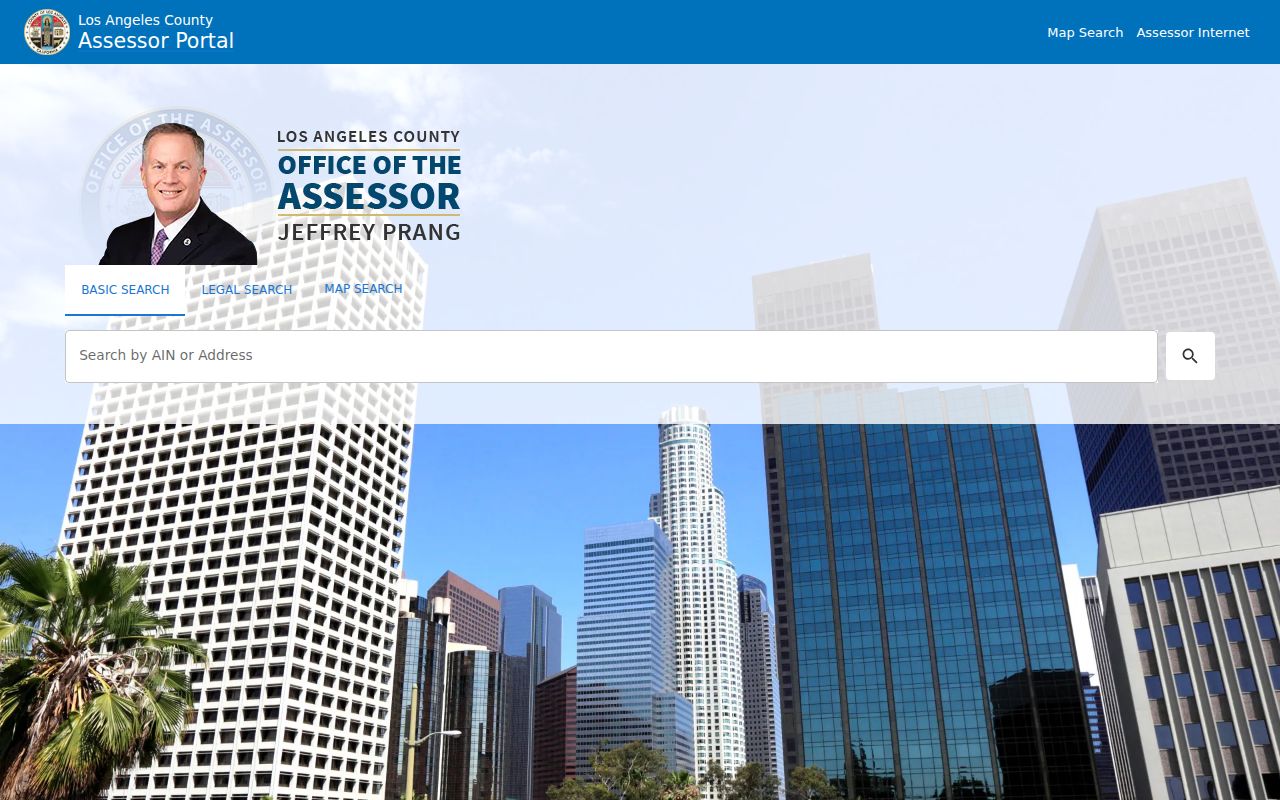
Use the AIN as the stable parcel key, then seek the name through the lawful county channel when a person or deed fact is needed.
Norwalk Deeds Without Web Names
Los Angeles County recorded real-estate documents are public, but the RR/CC does not publish its grantor and grantee name index on the Internet. County Counsel linked that design to protected home addresses in recorded instruments and former Government Code section 6254.21. The free public viewing rooms are in Norwalk by appointment. The 1851-1957 indexes are on the lower level, while 1958-present material is on the second floor. Appointments can be scheduled about two weeks ahead.
This changes the order of a Norwalk residents directory search. The recorder cannot search by street address, APN, or telephone, and it will not perform a telephone index search. First locate the parcel and obtain a current owner name through the Assessor's in-person or Property Data Sales channel. Then search the RR/CC alphabetical index by grantor or grantee and year. When the document is identified, a copy request can use the document title, names, and recording year or range.
Norwalk's offline pivot. Address to AIN, AIN to a lawful owner-name source, and owner name plus year to the RR/CC index. The missing web name field is a design limit, not proof that no deed exists.
The mail route goes to Real Estate Records, P.O. Box 1130, Norwalk, CA 90651-1130. A mail search needs the document title, party names, and year or range. Search charges are $0.50 per name and year, with a $1 minimum. Plain copies cost $5 for the first page and $3 for each added page. Certified copies cost $6 for the first page and $3 for each added page. Orders are estimated at about 20 working days.
The RR/CC viewing notice below makes the name-and-year method visible. It is useful evidence for why a street address alone cannot be typed into the deed index.
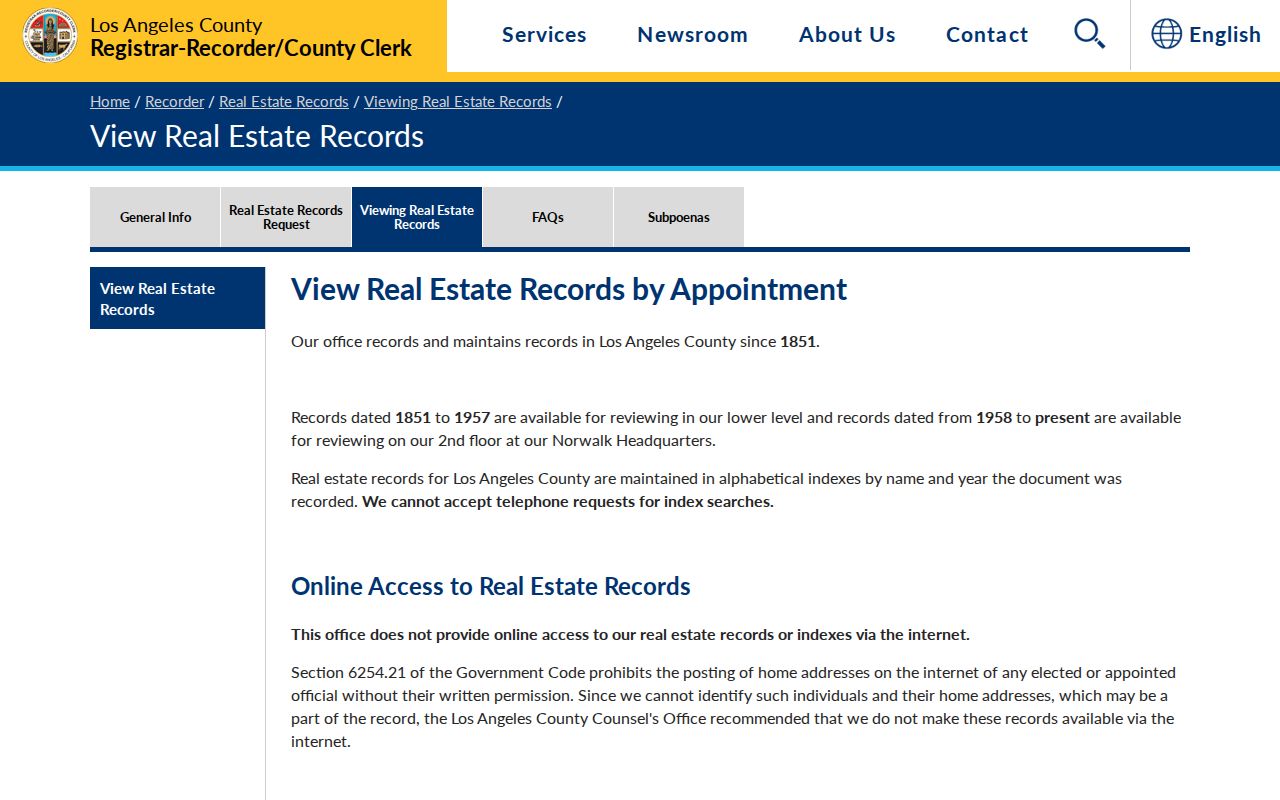
A deed records a transfer, not a full household. It can establish who conveyed or received an interest and which legal description followed the transfer. It cannot by itself prove present occupancy.
Current Norwalk Resident Sources
Norwalk has several directory-like sources, but each one answers a narrower question. Property data anchors a parcel. A deed index follows title parties. The county voter service confirms a person's own registration or supplies purpose-restricted election data. A business or professional record shows an affiliation. A public agency request can uncover a record that has not been posted. The table keeps those roles separate.
| Source | What It Describes | Keeper | Access |
|---|---|---|---|
| Parcel detail and assessment roll | AIN, situs, values, structures, and owner information through offline channels | LA County Assessor | Free web parcel search; owner data in person or sales channel |
| Recorded instruments | Grantors, grantees, deeds, liens, notices, and legal descriptions | LA County RR/CC | In-person name/year index, then copy request |
| Registration status | One voter's own status and election district details | LA County RR/CC | Identity-authenticated self-lookup |
| Professional and business filings | License status, entity roles, agents, and reported addresses | California DCA and Secretary of State | Free online searches, with board-specific limits |
| Historical directories and census | Past household or business listings at a dated point | Norwalk Library, FamilySearch, NARA | Closed stacks, catalog access, or public archive search |
A recent official record plus a second independent record is stronger than a single directory hit. A property owner may not be the occupant. A business agent may not live at the business address. A directory entry may persist after a move. The record type, date, and relationship should be written beside every match.
| Official county or state roll | Commercial compilation | Best use |
|---|---|---|
| Created by a named custodian for a defined legal purpose | Merges records from several sources and may lag corrections | Verify the fact with the office that holds it |
| Has a source date, record type, and access rule | May blur ownership, affiliation, and residence | Use only as a lead, never as a substitute for the custodian |
| May require a counter, form, fee, or purpose declaration | May offer a fast filter but not a complete household view | Choose the narrowest lawful channel |
The comparison is especially important in Norwalk because the public parcel map is online while the recorder's name index remains offline.
Norwalk Court Records Search
Los Angeles Superior Court access is split by case type. Norwalk Courthouse is at 12720 Norwalk Boulevard. The court's case-access tools can show a civil, criminal, family, probate, or small-claims summary when the proper service is used. A name search costs money, while a known case number is the precise follow-on. Remote access is not a complete file room. Juvenile, adoption, guardianship, mental-health, harassment, protective-order, sealed, and much family or criminal material is restricted under Rule 2.503 and other law.
A case result can include the case number, courthouse, filing date, case type or title, parties and roles, officer, status, hearings, and register entries. Civil document images may be available through a guest or account service with fees. When a document is not remote, the case number can be taken to the filing courthouse for the public portion of the file. The California Courts lookup explanation describes the local-access model.
The Los Angeles Superior Court case finder image below represents the case-access route used when a name or case number needs a court-specific check.
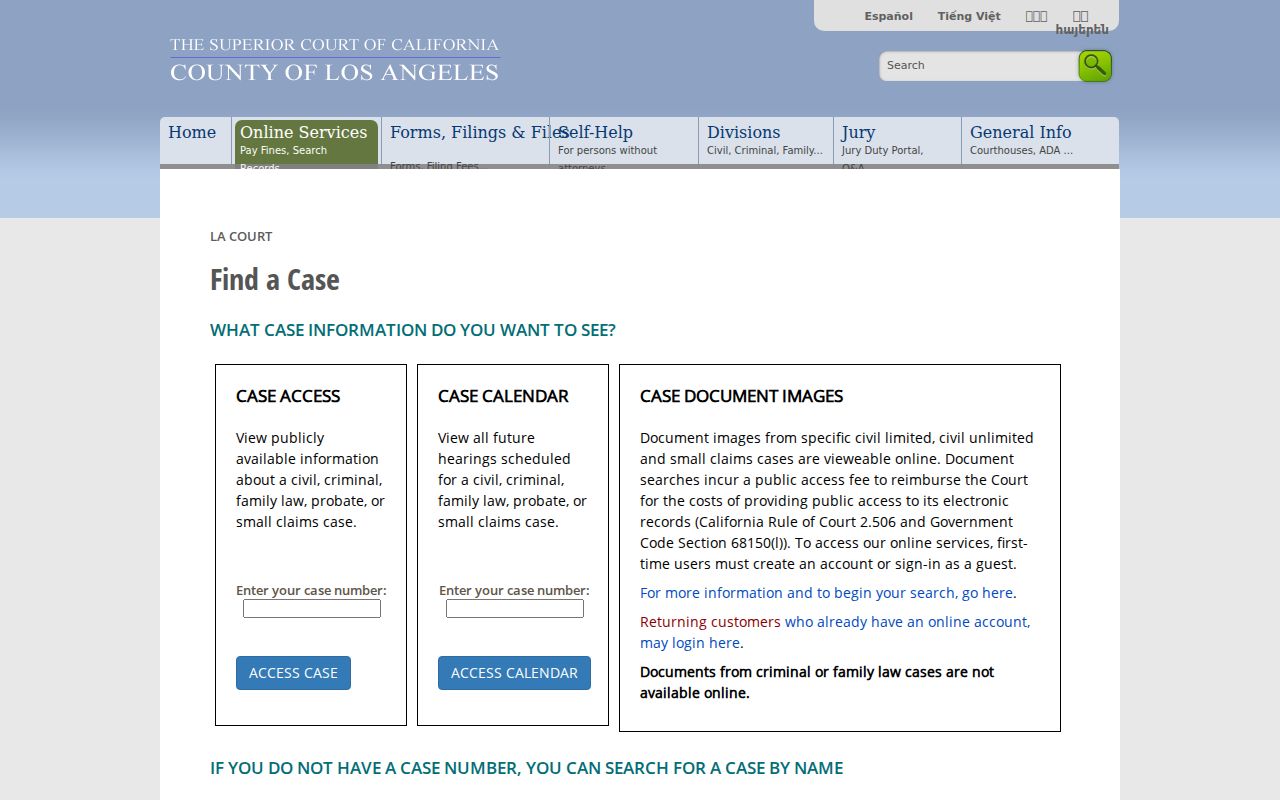
Control namesakes with a middle initial, party role, case number, filing court, related address, or matching date. A docket is the court's running record of filed events. It is not the same as the full document set and is not automatically a certified copy.
Norwalk Vital Copy Rules
Birth, death, and public-marriage records follow separate access rules. Los Angeles County RR/CC holds county copies, while California Department of Public Health maintains statewide vital records from July 1905. Confidential marriage records are held by the County Clerk and are limited to a party or court order under Family Code section 509. A divorce certificate of record is not the same as the decree held in the court file.
California distinguishes authorized copies from informational copies. Authorized birth and death copies require a qualifying relationship and, for the state VS 111 process, a sworn and notarized statement. An informational copy can be available to a broader requester and is marked that it is not a valid identity document. The 2026 state fee schedule lists $31 for a birth copy, $26 for death, $19 for marriage, and $18 for dissolution records. County fees differ, so the CDPH fee page should be checked before an order.
The California Vital Records overview below shows the statewide custodian route used when an event needs formal proof.
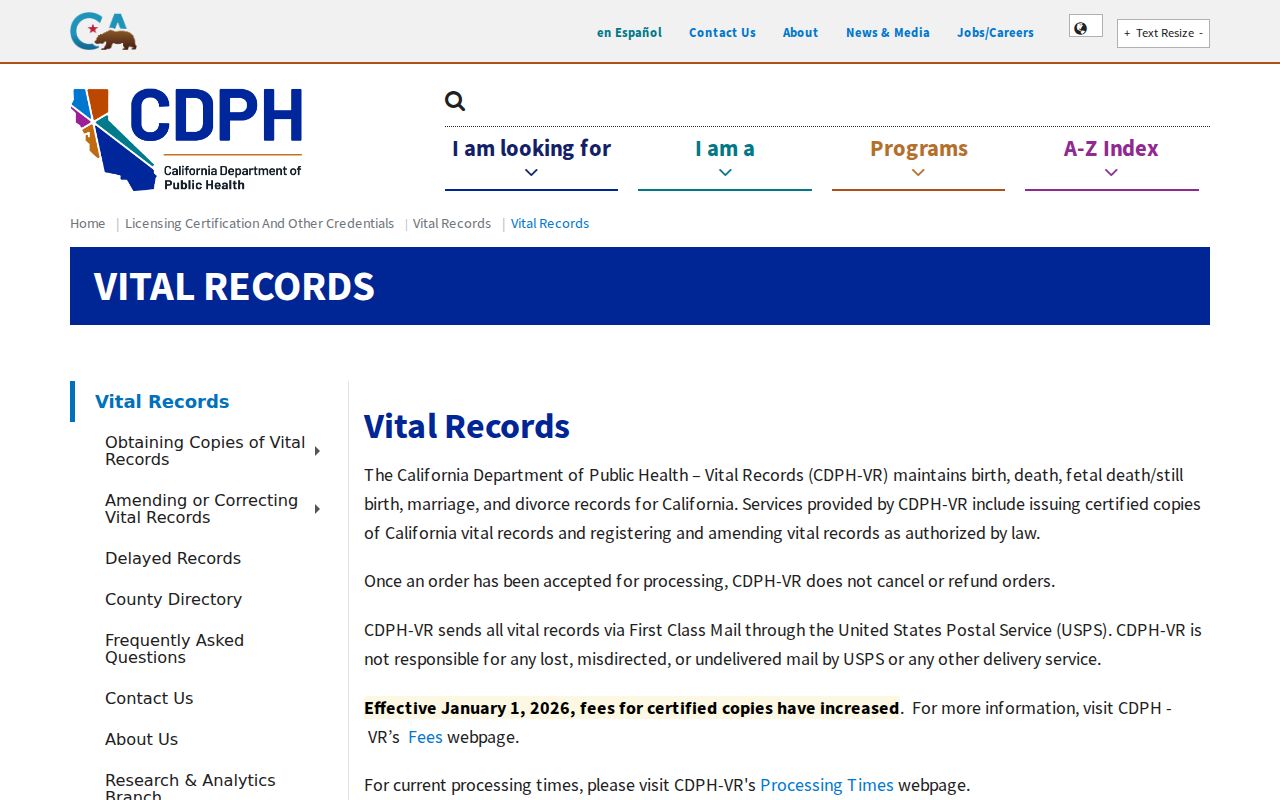
County modern records may be available the same day, while older or exception years can take up to 20 business days. Random searching is barred, and a request needs enough identifiers and identification. This is why a Norwalk residents directory lookup should use a known person, relationship, and event rather than a broad name sweep.
Norwalk's Restricted Voter Trail
The LA County Registration Status tool is an identity-authenticated service for a voter checking their own record. It is not a public street roster. Broader election information comes through RR/CC Election Information in Room 2013, by mail or in person, with purpose and access limits under Elections Code sections 2187 and 2194. Participation history can show that a person took part in an election, but never how that person voted.
A certified copy request asks for full name, date of birth, residence address, city and ZIP, a different mailing address when needed, telephone, signature, and payment. An own-copy fee is $1.50. Other authorized copies cost $6.75, a file search is $5 per name, and history is $6.75 per name. A voter-file order uses a qualification and permitted-purpose declaration. The county form lists options such as political, media, academic, legal, and governmental purposes. A countywide file is $146, with smaller city, district, or precinct options priced separately.
The LA County Registration Status service image shows why a self-check is different from a public resident roll.
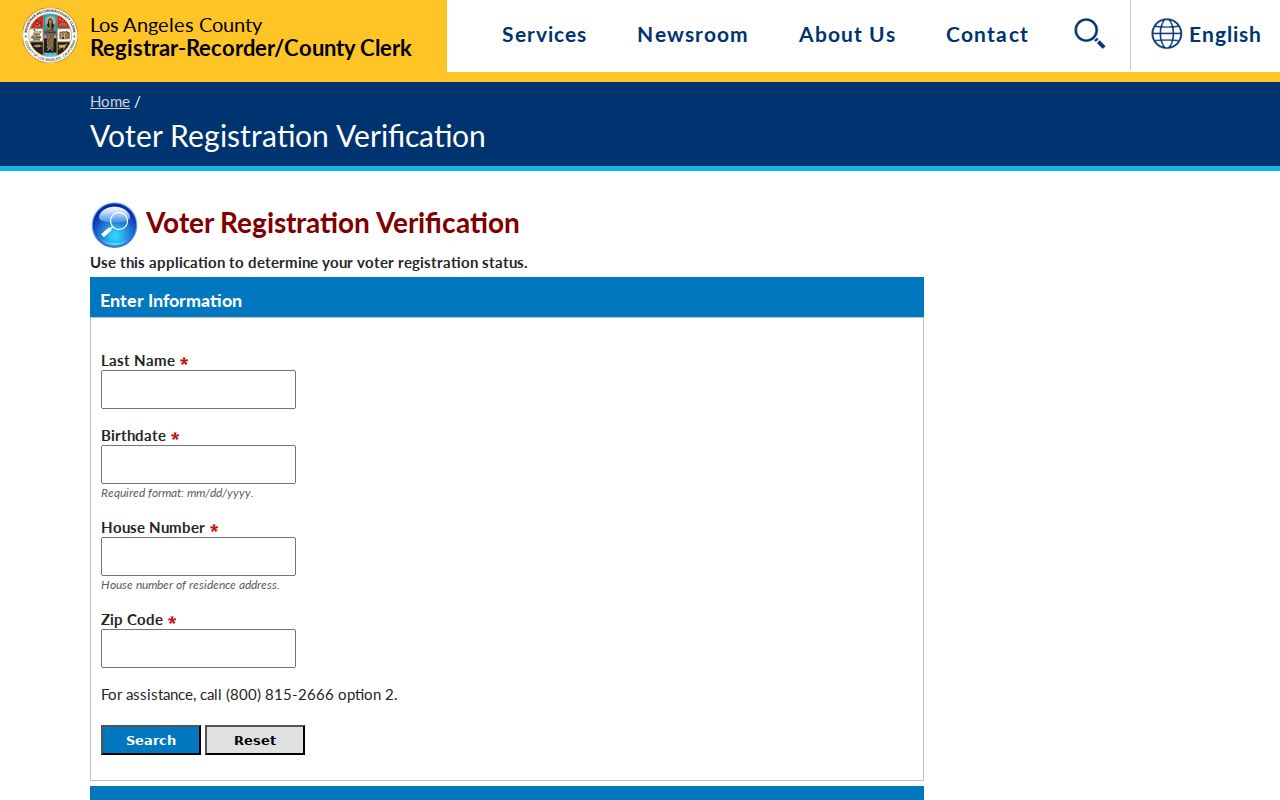
Note: A California voter record can be restricted by purpose or protected status, so a missing street match does not show that a person has no local connection.
Norwalk Business and License Records
A business filing or professional license can help distinguish people with similar names, but it describes an affiliation rather than a home. California Secretary of State bizfile searches by entity name or file number and can expose entity status, jurisdiction, addresses, agent details, filing history, and available PDFs. The DCA umbrella search accepts a board, license type, number, business, or first and last name. Its advanced mode can filter by city, county, status, discipline, and public documents.
Los Angeles County fictitious-business-name filings add a county clerk route. The Norwalk Chamber member directory is a separate community lead that searches by term and business category. Its results may show an organization, address, phone, email, web address, fax, or contact. Those records can reconnect a researcher with a civic group or former organization, but a listed agent or business address is not proof of residential occupancy.
The California DCA license search and the business filing source below show the difference between a license record and an entity record.
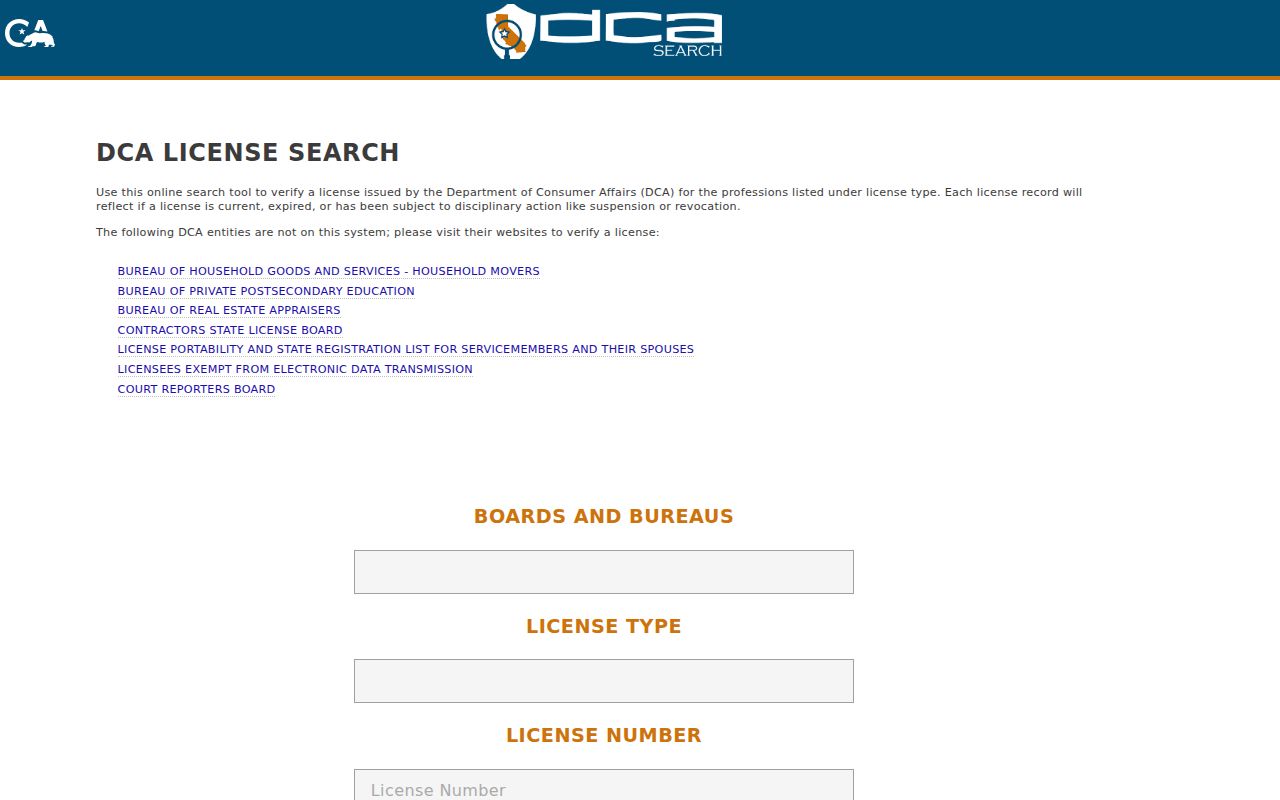
When a business name is the starting clue, pair the entity number or license number with the correct filing date. The Secretary of State bizfile search supplies the entity route, and its identifier is more useful than a broad name match.
State Controller unclaimed-property results can add an old place association, but a claim requires documentation. The result is a lead for family research, not proof of a current Norwalk residence.
The State Controller's unclaimed-property search is another name-based lead for a Norwalk residents directory question.
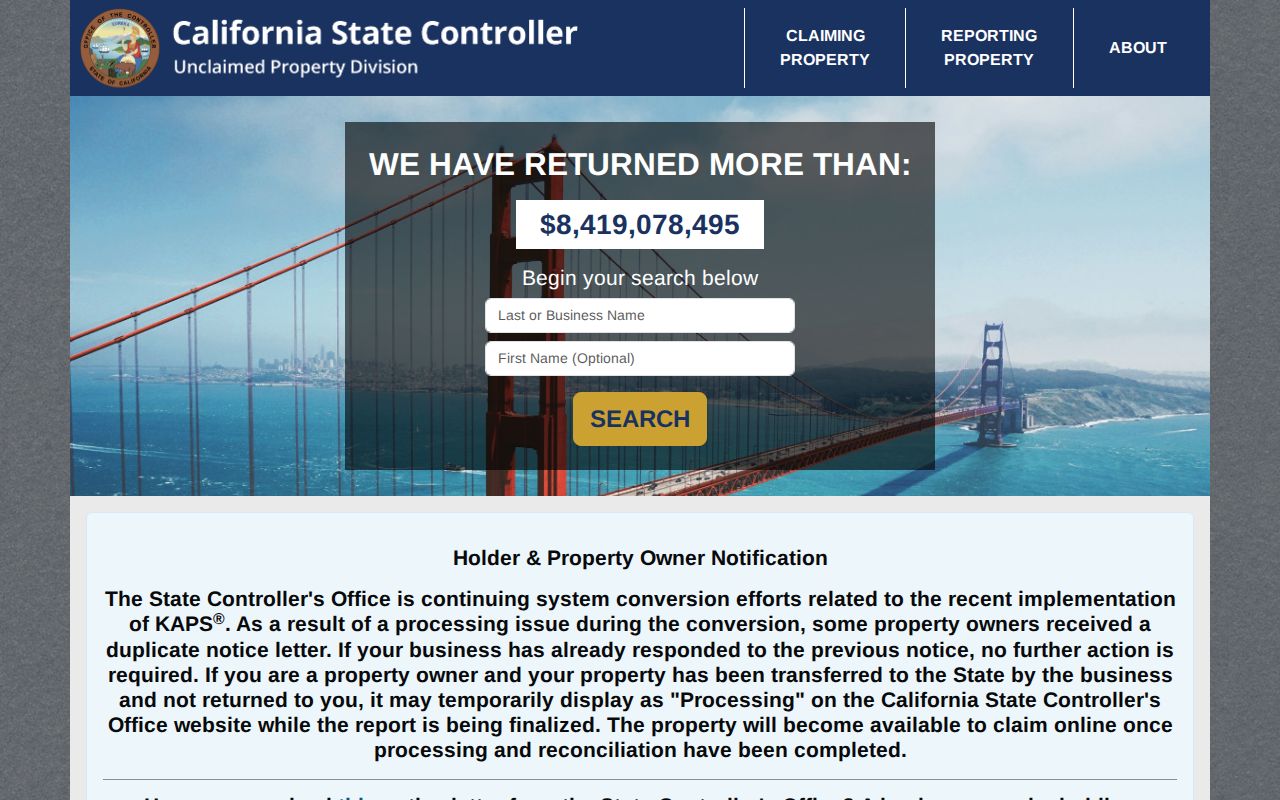
Old reported addresses can help connect a person to a place, but the claim process requires documentary proof and the result may no longer be current.
Norwalk Privacy and Safe at Home
California gives privacy a direct role in resident research. Safe at Home offers an eligible participant a substitute mailing address, confidential voter registration, and specified record protections under Government Code sections 6205 and following. A deed, voter, or other government record may show a substitute address or omit an identifier. That gap is a safety control, not evidence that an index is broken.
The California Consumer Privacy Act and CPRA, Civil Code section 1798.100 and following, provide rights to know, delete, correct, opt out of sale or sharing, and limit sensitive information for covered commercial data. Public government information is generally excluded from that commercial framework. California's DROP program opened in 2026 and sends one deletion request to more than 500 registered data brokers, with broker processing beginning August 1, 2026. To correct a public record, contact the custodian that created it rather than a data broker.
The Norwalk city public-records request portal below shows the municipal fallback when a city record is identifiable but not posted online.
Lawful personal use. Public records support family history, civic research, estate work, and personal safety. Do not use a Norwalk residents directory search to stalk, harass, intimidate, or repeatedly contact anyone. A record match is a lead to verify, not permission to intrude.
Norwalk's Historical Resident Shelf
The Norwalk Library's Californiana Collection supplies the historical side of a residents directory search. It is a closed-stack collection with more than 24,000 books and more than 200 magazine and newspaper titles in paper or microfilm. Staff can search Norwalk, Artesia, Cerritos, Downey, Bellflower, and Los Angeles County titles because regional volumes combine communities. The collection includes census schedules from 1850-1910, nineteenth-century city directories, Alta California, Los Angeles Star, and official histories.
Three verified Norwalk editions are listed in the research catalog: Norwalk, City Directory for 1953, Norwalk, California, City Directory for 1960, and Artesia, Cerritos and Norwalk, California, City Directory for 1975-76. FamilySearch also provides a California collection path, while NARA's 1950 census is indexed locally under Downey Judicial Township. The full shelf and reading method belong in the Norwalk directory book treatment.
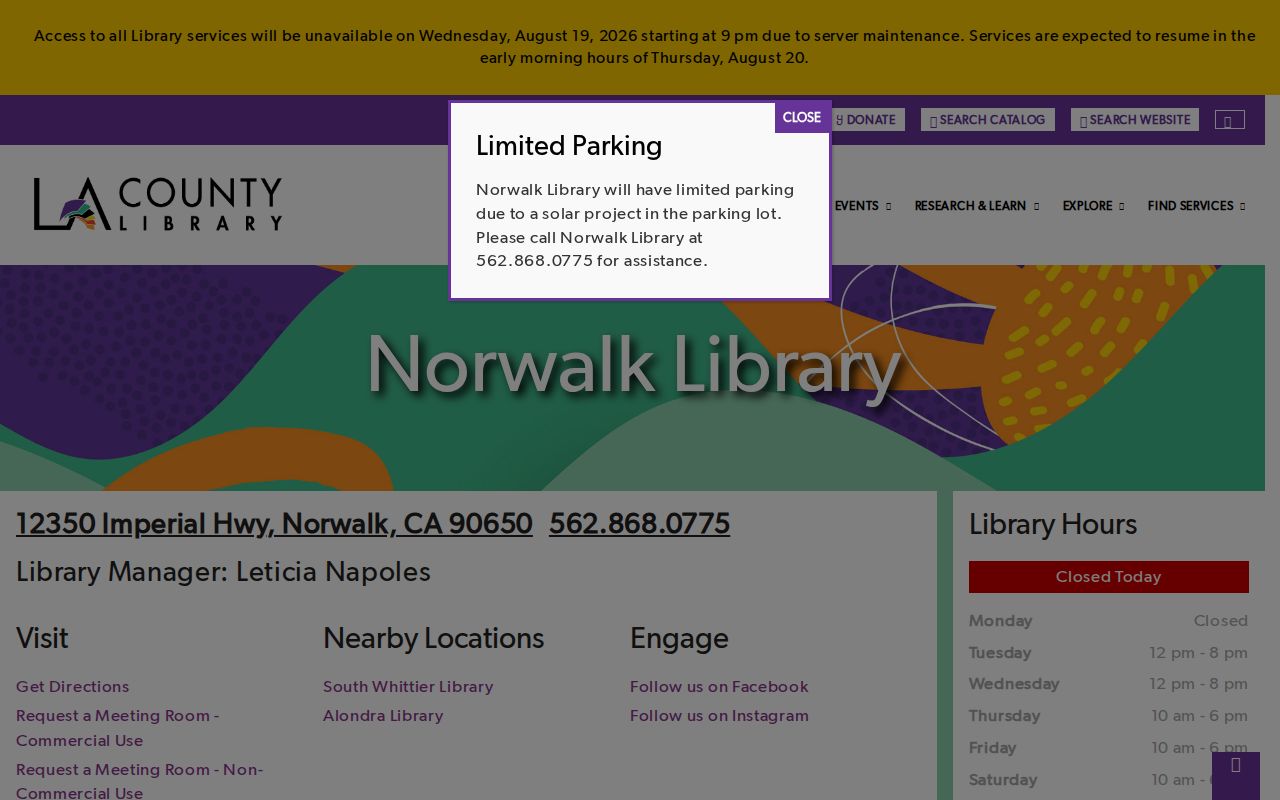
The Norwalk Library local-history page image below shows the access point that connects directory volumes to newspapers, census material, and community memory.
A directory entry is a dated clue. It may reflect a household listing, a business listing, or an address-order section. Compare it with a deed, census, permit, obituary, or probate file before treating it as a settled fact.
Norwalk's Pre-City Records Story
Norwalk's record history does not begin with city incorporation in 1957. The library began in July 1913 as the seventeenth Los Angeles County Free Library branch, with 500 books upstairs in the Stiffler Building. Oil growth near Santa Fe Springs expanded use in the 1920s. Deeds, courts, and vital records remained county or state series, while local memory grew through library holdings, family accounts, schools, farms, dairies, and civic groups.
The 1950 census is the key indexing caution. Norwalk-area enumeration districts were cataloged under Downey Judicial Township, with boundaries that reference Imperial Highway, Carmenita, Rosecrans, Bloomfield, Firestone, Norwalk Boulevard, Sproul, Clarkdale, Olive, and San Antonio. A search limited to a modern city label can miss a household that the archive placed under the older township name.
The county records request portal can be used when a city record is identifiable but not posted online. Under the California Public Records Act, an agency generally determines disclosability within 10 calendar days and can extend that period by up to 14 days for unusual circumstances. The law does not require an office to create a new list or disclose an exempt personal record. A precise request names the department, record type, date range, and known location.