
Norwalk Previous Residents Sources
A backward address trail needs several time layers. The recorder shows transfers. The Assessor gives the current parcel anchor and build clues. Census schedules show named occupants at an enumeration date. A directory can fill the years between census snapshots. Probate or an obituary can explain why an estate, trustee, or heir appears in a deed. The coverage table shows where each layer fits.
| Source | Years It Covers | Where Held | What It Shows |
|---|---|---|---|
| Recorder deeds and index | 1851-present; county descriptions also say records maintained since 1850 | LA County RR/CC, Norwalk | Transfers, grantors, grantees, liens, legal descriptions |
| Assessor parcel | Current roll and base-year/value events | LA County Assessor Portal | AIN, situs, use, structures, build and effective years, map links |
| Federal census | Public through 1950 under the 72-year rule | NARA and library access | Named occupants at a dated enumeration |
| City and criss-cross directories | 1953, 1960, and 1975-76 verified; full run not located | Norwalk Library and regional collections | Address or name clues between census dates |
| Probate, obituaries, permits | Record-specific; exact Norwalk runs vary | Court, library, city, and newspaper channels | Estate parties, death clues, or work-history context |
The previous residents of a parcel are not always the same as its past owners. A deed names a title relationship. A directory names a listed household or business. A census enumerates people on a date. Keep those categories apart.
Norwalk Previous Residents Recorder Trail
Norwalk houses the county's public viewing collection for recorded real-estate records. The RR/CC headquarters is at 12400 Imperial Highway. The 1851-1957 alphabetical grantor and grantee indexes are reviewed on the lower level. The 1958-present indexes are on the second floor. Public viewing is appointment-based, and appointments may be scheduled about two weeks ahead.
The recorder has no Internet name index and cannot search by address or APN. It also refuses telephone index searches. That is why a previous-residents search begins with the Assessor parcel and a lawful owner-name channel. Mail, fax, or online copy requests come after the document is identified. The mail route asks for document title, names, and year or range.
The Los Angeles County recorder overview image below shows the county office that holds the central title trail.
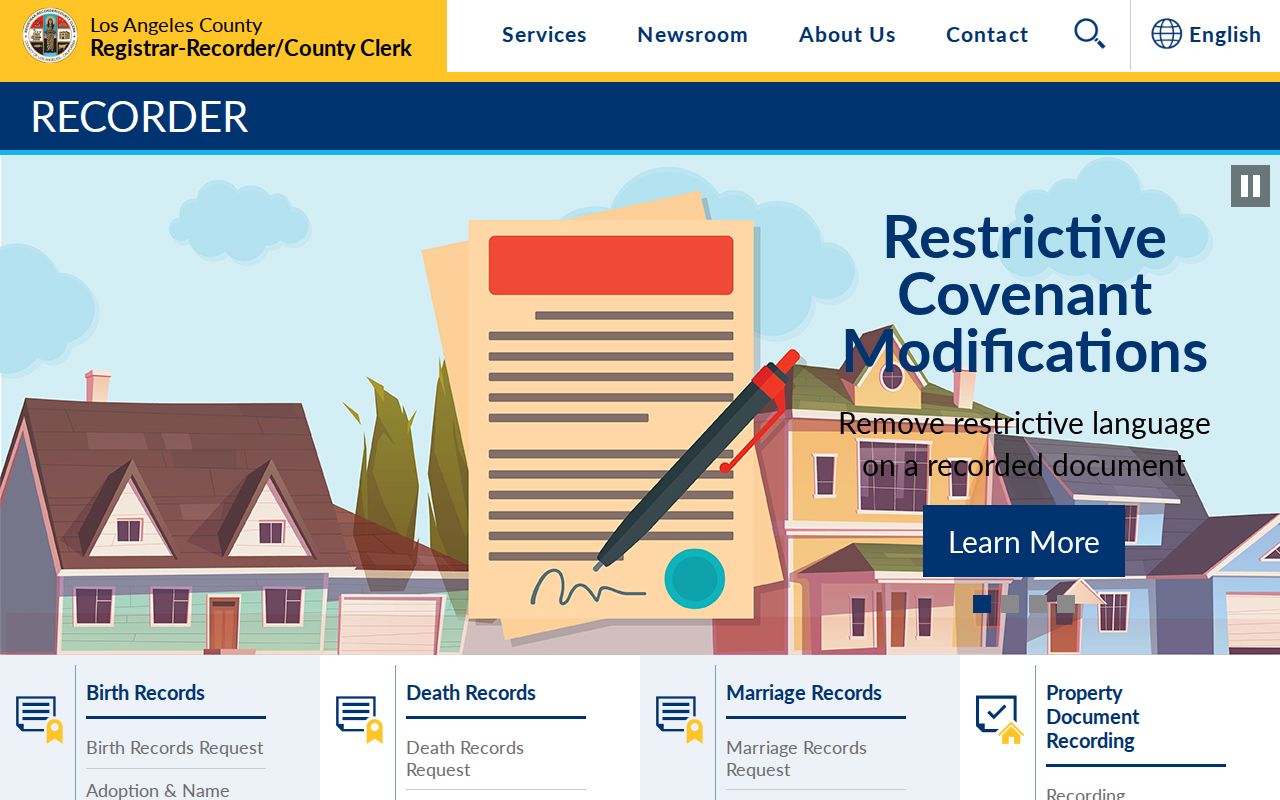
Search fees are $0.50 per name and year with a $1 minimum. Plain and certified copy fees begin at separate first-page rates, and orders are estimated at about 20 working days.
Tracing Norwalk Deed Records Backward
The backward chain starts with a current owner name and a likely acquisition period. Search that person as a grantee. Read the deed for the seller, recording date, document number, and legal description. Then search the seller as an earlier grantee. Repeat until the name or legal description reaches the desired era. A grantor is the party conveying an interest. A grantee is the party receiving it.
- Open the Assessor Portal by address or AIN and record the current parcel facts.
- Obtain the current owner name through the lawful county channel because the public web omits owner-name search.
- Search the RR/CC index by grantor or grantee name and recording year.
- Identify the deed and copy its date, parties, document number, and legal description.
- Search the prior grantor as an earlier grantee, checking tract, lot, and legal description at each step.
The chain can show previous owners, but it does not automatically show all previous residents. Pair each transfer with a dated directory, census, obituary, or probate record.
Norwalk Parcel Records and Legal Descriptions
An AIN is the stable parcel key in a Norwalk address history. The street string may change, abbreviations may shift, and a mailing city may differ. The AIN, tract, lot, and legal description help keep the chain on the same land. The Assessor's assessment boundary description is not the deed's legal description, and the assessment map is not a boundary survey.
Assessor results can show AIN, situs, use or parcel type, tax area, exemptions, structures, units, beds, baths, land and building square feet, year built, effective year, values, base-year value, map links, and parcel-change activity. “Year Built” means at least half of original construction was complete. “Effective Year Built” reflects major rehabilitation. Neither field names a resident.
- Chain of title
- The linked sequence of recorded transfers for the same land.
- Legal description
- The deed's land description, which can be more stable than a street label.
- Grantor
- The party conveying the recorded interest.
- Grantee
- The party receiving the recorded interest.
- AIN
- The Assessor Identification Number used to locate a parcel in county tools.
This parcel-first method prevents a previous-residents search from jumping to a nearby property with a similar number or street name.
Norwalk Previous Residents Directories
Norwalk's verified directory clues include 1953, 1960, and the combined 1975-76 Artesia, Cerritos, and Norwalk volume. The Norwalk Library Californiana Collection is closed stack and includes directories, census schedules, newspapers, microfilm, and local histories. The research does not establish a complete reverse-directory run, so a missing year should be marked rather than invented.
Pair the directory years with the 1950 census and the deed chain. A name or address in a directory can show a household or business listing at that point. It may not prove ownership, and disappearance can mean a move, death, unlisted household, or missing volume. For the collection itself, the Norwalk directory book shelf explains the regional headings and entry keys.
The FamilySearch California records route image below shows a broad historical-record source that can supplement the local shelf when a previous-residents search reaches a gap.
FamilySearch California collections include county naturalizations, birth and death index material, and probate estate files, but those collections are not a substitute for a Norwalk directory page.
Norwalk's 1950 Township Clue
The 1950 census indexes the Norwalk area under Downey Judicial Township. Enumeration district 19-518 references Imperial Highway, Carmenita, Rosecrans, Bloomfield, Firestone, Norwalk Boulevard, Sproul, Clarkdale, Olive, and San Antonio. That older geography matters when a directory or census search seems to omit a Norwalk family.
Search the modern city name and the township label. Compare street, household, and nearby geography. The archive's jurisdiction heading may change while the family remains in the same area. This is a geographic indexing clue, not proof of a move.
- Write the modern address and AIN beside the old directory or census entry.
- Search 1950 under Downey Judicial Township as well as Norwalk.
- Compare street names and neighboring landmarks before rejecting a candidate.
- Use a deed, probate, or later directory to test continuity.
The 72-year rule makes 1950 the newest public census, so later household history needs other records.
Norwalk Probate and Estate Deeds
Probate can explain a deed that appears to jump from a decedent to an heir, trustee, or estate representative. Start with an obituary or death clue, then search Los Angeles Superior Court probate by decedent name. A petition or order may identify heirs and the authority for a conveyance, subject to redaction and court-access limits. The probate file is not automatically open online in full.
Use the deed's legal description to connect an estate transfer to the same parcel. Do not assume that a name in a probate index occupied the property. The record may describe an heir, creditor, attorney, trustee, or other party. A previous-residents timeline becomes stronger when the deed, probate event, and directory or census date agree.
Norwalk House History Gaps
Sanborn fire-insurance maps could help with building use and numbering continuity, but the research did not locate an exact Norwalk sheet run. The same gap applies to an official Norwalk house-history guide, a complete reverse-directory run, and a verified permit cutoff. The Library of Congress Sanborn collection is a possible archive route, not evidence that a specific Norwalk sheet exists.
The Los Angeles Conservancy historic-places resource image below adds a regional preservation route when a house-history question needs context beyond the deed chain.
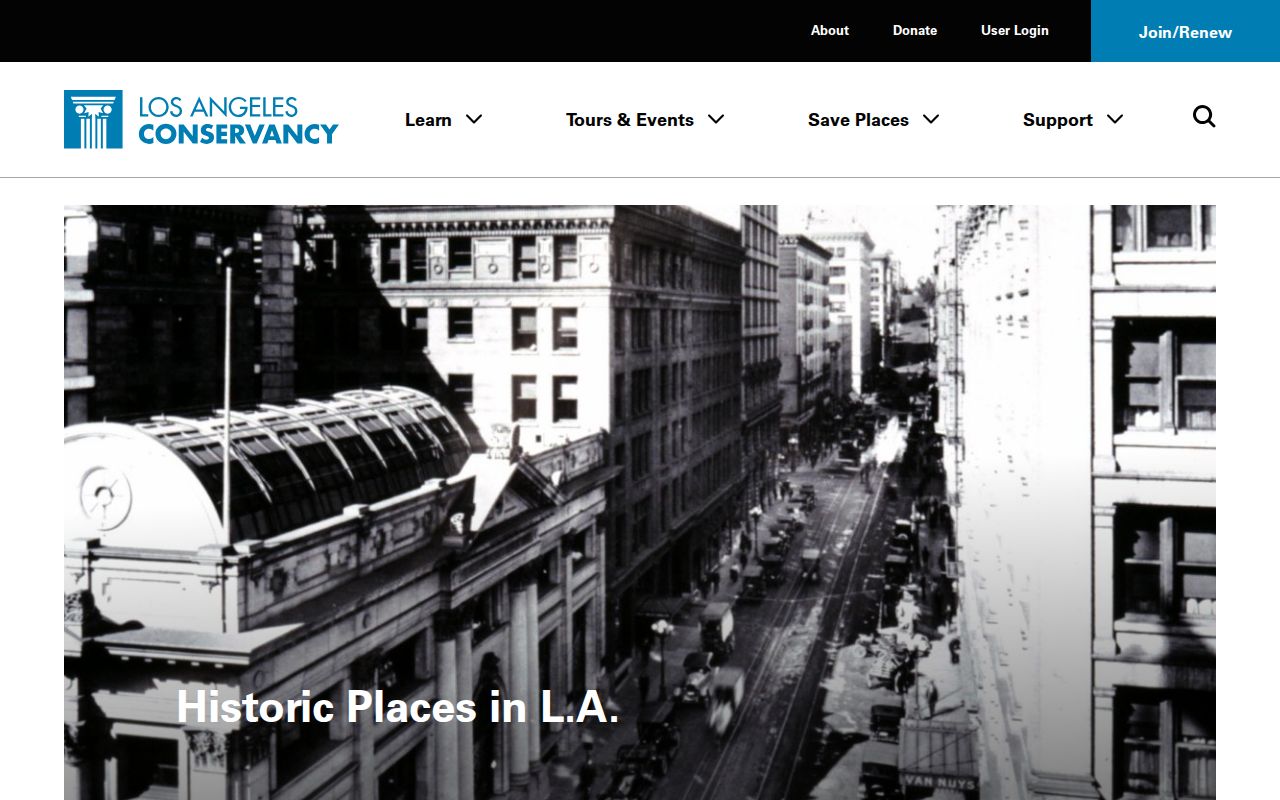
Keep the gap honest. Mark the source that was checked, the years that remain unknown, and the next custodian or collection to ask. A missing map does not erase a deed chain, and a missing directory does not prove an address was empty.
House-history rule. Use the parcel, tract, lot, and legal description as the spine. Add directory and census entries only when their date and locality are clear.
Previous Residents in Norwalk Households
Previous residents are a household layer, not a title layer. Start with a dated directory or census entry and record the name, street, locality, and any relationship mark. Then test it against the deed chain, permit history, obituary, or probate event. A directory may list a principal person, a business, or a household at a particular date. It may not list every person present.
The Norwalk Library began in 1913 with 500 books upstairs in the Stiffler Building, before city incorporation. That local memory layer can connect families to schools, farms, dairies, neighborhoods, and civic institutions. The library's regional shelf also explains why a past household may appear under Artesia, Cerritos, Downey, or Los Angeles County.
A present-day address check belongs in the Norwalk street directory workflow. The backward trail stays focused on who lived there before, when the evidence is dated, and how the parcel identity was held constant.
Norwalk's Homeowner Alert
The RR/CC Homeowner Notification and e-Notification program is a current safety tool for property owners. It combines mailed notices with Assessor-profile email alerts. It does not make the deed index searchable online, but it can help a current owner spot an unexpected recording or an official-looking solicitation.
The county has warned about overpriced deed-copy letters. Use the independently obtained RR/CC number, (800) 201-8999 option 3, before paying a private mailer. A forged deed, lien, estate emergency, jury threat, or “fee to release” unclaimed property claim should be checked through an official channel. A previous-residents search is for record history, not a reason to contact a household.
The RR/CC homeowner-notification page image below connects modern property protection to the older deed trail.
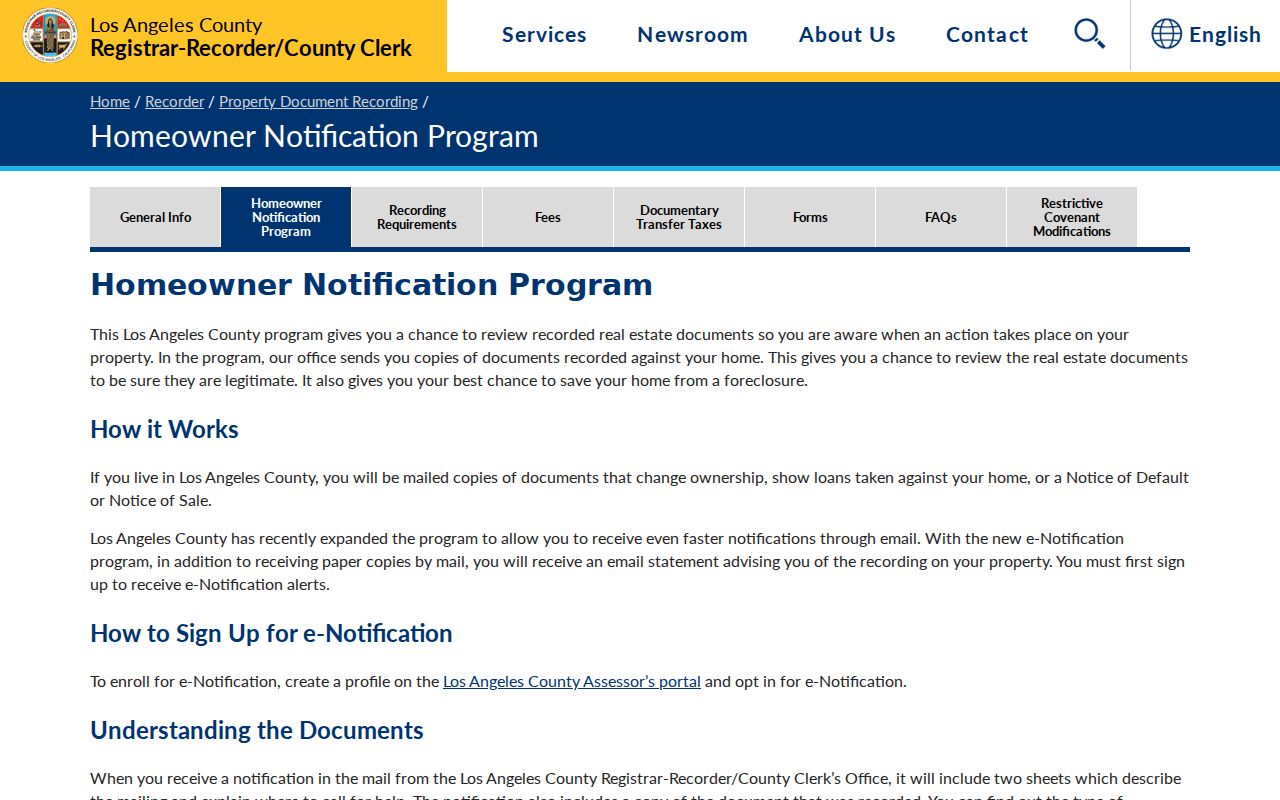
Verify every present claim with the custodian before relying on a record or responding to a request.
Norwalk Recorded Copy Requests
For previous residents, once the deed number, title, names, and recording year are known, RR/CC offers mail, fax, or online copy channels. Plain copies cost $5 for the first page and $3 for each added page. Certified copies cost $6 for the first page and $3 for each added page. A search request is charged by name and year, and the mail estimate is about 20 working days.
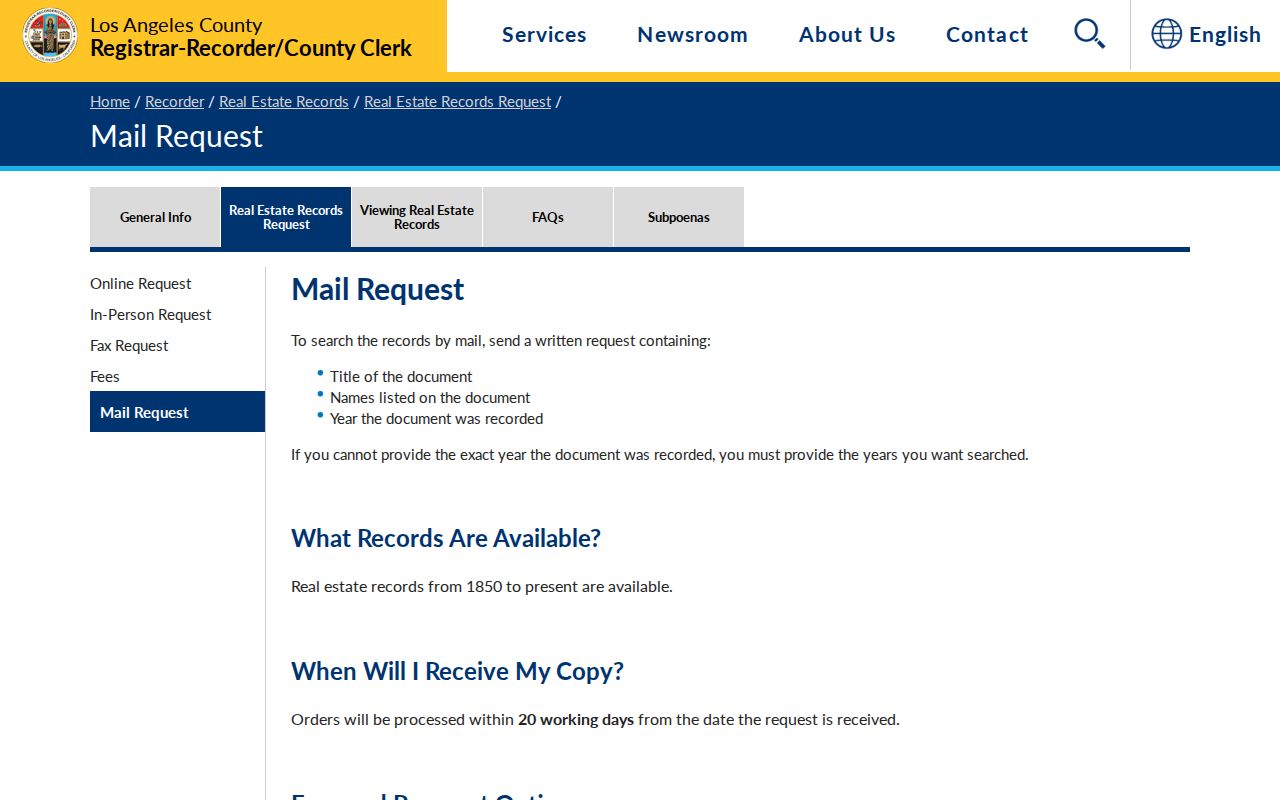
The RR/CC recorded-document request page image below shows the follow-on step after the index work. Keep the request narrow and include the legal description or parcel clue when available.
A certified copy confirms the custodian's record. It still does not turn a title transfer into proof of household occupancy.